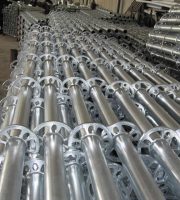
For construction companies, the value of this hazard identification atlas lies not only in “identifying hazards”, but also in “eliminating hazards and preventing accidents”.
By establishing a long-term mechanism for identifying and controlling hidden dangers in scaffolding engineering, hidden danger identification will be integrated into the entire process of daily management, regular maintenance, process changes, and inspection and maintenance operations of the scaffolding.
Rectification measures will be implemented in all aspects of job responsibilities, operating procedures, and emergency preparedness.
When every set of scaffolding has a clear hidden danger file, every hidden danger has a closed-loop rectification process, and every inspector has mastered the basic skills of hidden danger identification, the safety defense line of construction can be truly strengthened.
May this atlas become a “hidden danger map” and “treasure trove” for the safety management of scaffolding engineering, enabling more accurate identification of hidden dangers, more effective risk control, and a more solid safety bottom line, so that safety under scaffolding is not “suspended”, and every high-altitude operation is safe and worry free.
.